Translate

Tuesday, March 31, 2020


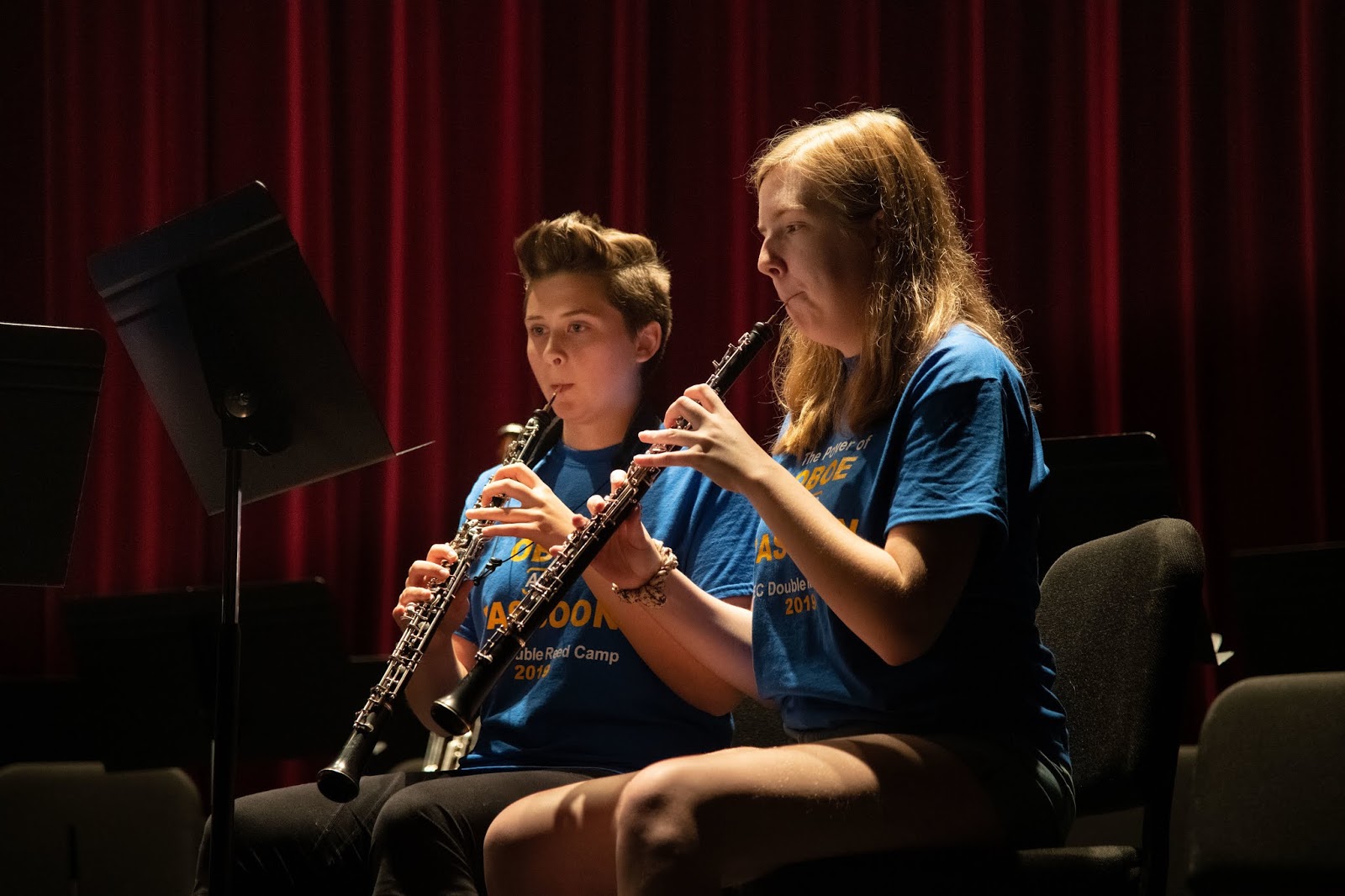
The UWEC Summer Double Reed Camp 
for High School Musicians
is Moving ONLINE 
but is 
BETTER THAN EVER!!!

June 28-July 2, 2020

Due to the COVID19 pandemic,  the UWEC Double Reed Camp is going VIRTUAL.  But,  we're not lamenting this change---in fact,  I'm shouting from the rooftops that this will be the BEST CAMP YET!  A few reasons:

1.  We've got a lineup of some of the VERY BEST GUEST ARTISTS ANYWHERE!  


Claire Brazeau
Principal Oboist, LA Chamber Orchestra


Peter Cooper

Peter Cooper

Principal Oboist, Colorado Symphony
University of Colorado, Boulder


Jennifer Lim & Katherine Needleman_Anne Hornemann-2339.JPG

Katherine Needleman
Principal Oboist, Baltimore Symphony Orchestra


Dwight Parry
Principal Oboist, Cincinnati Symphony Orchestra


James Austin Smith
Co-Principal Oboist, Orpheus Chamber Orchestra
Executive Director, Tertulia
http://www.jamesaustinsmith.com/


2.  The camp fees have been reduced to only $150 for all participants! 
3.  The main camp instructors will still be:
Christa Garvey,  UWEC oboe faculty
Lindabeth Binkley, Central Michigan University oboe faculty
Carrie Vecchione, McPhail Center oboe faculty
We'll have individual lessons,  group classes,  masterclasses with guest artists,  reed making/adjusting sessions,  chamber music, oboe "hangout" times AND more!
To apply: all applicants must submit a short three to five minute audio or video recording that includes one to two excerpts from a solo piece or etude that exhibits the participant's technical and lyrical playing abilities. No piano accompaniment is necessary. A recording made from a cell phone is totally fine, just make sure the microphone is approximately six feet away from the performer. We will notify you within approx. two weeks of your application for acceptance into the program. Priority deadline for submission is May 1st, 2020
Click here to apply


Thursday, March 5, 2020

Come Join Us for the 2020 UW-Eau Claire Double Reed Camp!


UW-Eau Claire Double Reed Camp

June 28-July 2, 2020


Come join fellow double reed players for a week of music, learning more about the oboe and bassoon, reed making and FUN!
The camp provides instruction for high school aged oboists and bassoonists in an enjoyable and challenging yet very supportive environment. All aspiring double reed musicians are encouraged to apply! Daily experiences include masterclasses, intensive reed making sessions, workshops on special topics, chamber music sessions, and faculty recitals. Tuition also includes individual and small group lessons, repertoire coaching with a pianist, minor instrument repair, and optional participant recital performance of solo pieces. Camp ends with informal performances of chamber music.

The camp will be limited to approximately 15 oboists and 15 bassoonists this year.  All levels of players are encouraged to apply! 


The priority deadline for submitting an application is APRIL 1, 2020

For more information, check out the link below. 


Wednesday, January 24, 2018

Some thoughts on reed making


Who should learn how to make reeds? 
Definitely all oboists aspiring to professional levels should learn how to make reeds.
All others are absolutely encouraged to learn.
If you are an oboist,  you do not HAVE to learn reed making,
but otherwise you must somehow supply yourself with at least 2 working reeds
that play consistently at proper pitch for ensembles, practice, and lesson work.
Buying reeds can be expensive and hit-or-miss in quality, and you may have to
wait for shipments to arrive due to backorders, reed makers going out of business, etc.


Some ground rules for reed making:

Reed making is sometimes difficult and frustrating to learn.
Do your best to keep a positive outlook and keep working at it!  
Like most new endeavors, you will not instantly be good at reedmaking. T
hings WILL get better/easier in time with regular practice.
I challenge you to try to learn at least 1 or 2 new things from EACH reed that
you make. And sometimes we learn the most from the failures.


The only way to learn how to consistently make good reeds is to continuously
be working on them. If you study reed making in a class or lessons, once you
have learned how to tie reeds, please bring in at least 2 newly tied reeds with
initial scrapings completed each week.These reeds should be free of air leaks
and have the tips intact. (So, yes, that means there may be a pile
of reeds that didn’t make the “cut” each week)


Set aside time outside of your practice times to specifically work on making reeds.
You may need to set aside more time than you initially thought!
You may spend more time making reeds some weeks than practicing.
Don't be surprised when those weeks happen. In time you'll get faster at
reed making. But you'll have to invest a lot of time for the first several years t
hat you are learning.

Reed class is a time for learning new techniques, refining your understanding of
reeds, etc. I have been making reeds independently since 1993. That said,  
I (and every other professional oboist and reed maker worth their salt) seek
out all opportunities to learn from one another, grow and improve. I hope you do, too.

Use your time in reed classes wisely. Showing up late, eating food, sugary drinks,
texting, etc is NOT appropriate use of your time in reed class.

When in a reed class, the teacher can’t scrape on multiple reeds at the same time.
However,  each of you should be paying attention to the work the teacher is doing
on each other’s reeds. (Go back and read #3 for rationale)

Not every reed that you bring to reed class will turn into a concert-ready reed.
We aren’t alchemists,  so don’t put all hopes into just one reed and do your best to
have back-ups at the ready.

Reed making is sometimes difficult and frustrating to learn.
Do your best to keep a positive outlook and keep working at it!  
Like most new endeavors, you will not instantly be good at reedmaking.
Things WILL get better/easier in time with regular practice.
I challenge you to try to learn at least 1 or 2 new things from EACH reed that you
make. (I can’t stress this enough).

Tuesday, May 23, 2017

Last Chance to Register for the 2017 UW-Eau Claire Double Reed Camp!

Last chance to register for the University of Wisconsin--Eau Claire Double Reed Camp for high school and adult amateurs June 25-30!  


We'll be accepting registrations until June 1st if there is still room available. The camp is affordable, convenient for those attending IDRS 2017 the days before, and LOTS of FUN! 

All levels are welcome. 

The camp is led by UWEC faculty Dr. Trent Jacobs (bassoon), Dr. Christa Garvey (oboe), with absolutely fantastic assisting faculty: Dr. Lindabeth Binkley (Central Michigan University and reed maker extraordinare!! Dr. Emily Kupitz ! Dr Carrie Vecchione (OboeBass! duo memeber) Alex Widstrand !  


To register follow the links at: www.OboeForEveryone.com


Wednesday, March 15, 2017

2017 UWEC SUMMER DOUBLE REED CAMP!


Share this link far and wide!  
Group work, individual lessons,  reed making sessions,
 large and small ensembles!
All in beautiful Eau Claire, Wisconsin June 25-30th 2017
online registration is open at:
 www.OboeForEveryone.com


 We hope to see you at camp!
Contact  me directly with questions
Oboe and out,

The Oboist

Friday, November 11, 2016

UWEC Double Reed Camp 2017! Mark Your Calendars for June 25-30th!


 CLICK HERE TO REGISTER !
Online payment available this year!

Mark your calendars and bring your friends! Sign up early to reserve a spot!  We'll limit the camp to 30 oboists and 30 bassoonists. Beginners through advanced levels are welcome and will be grouped with players of similar abilities for a very FUN and supportive learning environment.  There will be group classes, daily reed making intensives, guest artists, large and small ensembles, and individual lessons for all participants. Adults and high school students will be in separate performance classes,  but large-group work for guest presentations, etc.  
Consider the camp registration for an unforgettable Christmas present or a special give for yourself. 
Fees: $460 Tuition/meals/double occupancy housing
          $485Tuition/meals/SINGLE occupancy housing
          $250 for day participants not wishing to stay in the dorms
Scholarships are available for high school students with demonstrated need.  Inquire at garveycn (at) uwec.edu for more information or camp specifics.


Right before our final celebration concert
2016 Oboe Faculty
Adult campers 


REED MAKING is FUN!
The 2016 Instructors
Having a blast during an improvisation workshop

The Bassoon Crew


Wednesday, May 25, 2016


TO REGISTER ONLINE: CLICK HERE
Instructors:
 UWEC Double Reed Faculty
Dr. Christa Garvey AND Dr. Trent Jacobs

July 18-22, 2016
Fees: $150 Tuition
Optional housing & meals for double occupancy dorm: $205
or
Optional housing & meals for single occupancy dorm: $231

Come join fellow double reed players for a week of music, learning more about the oboe, and FUN!
The camp is divided into separate classes for adults and high school aged students and includes masterclasses, group lessons on etudes and technique, workshops, daily classes on improvisation led by Dr. Jacobs, daily, intensive reed making sessions, minor instrument repair, daily faculty recitals, a final group performance for all participants, and of course, FUN!

We will have a variety of skilled guest artists available to present masterclasses, workshops and performances. Guest teachers include Dr. Carrie Vecchione, oboe instructor at the MacPhail Center for Music, oboist Dr. Emily Kupitz,  and bassoonist Alex Widstrand. Dr. Molly Gebrian will also present her amazing presentation,  "What Musicians Can Learn About Practicing From Current Brain Research."

Participants can arrive on campus beginning Sunday, July 17th at 3pm with classes/workshops beginning Monday, July 18th at 9am.  Mon-Thurs classes will be held from 9am-5pm each day  and Friday  camp will be from 9-1 with the final participant concert from 12-1pm. In the evenings there will be supervised activities, games, campus concerts, movies, etc. 


For questions or more information contact me directly at:  garveycn@uwec.edu
To register,  fill out the form below.


All camp events will take place in the Haas Fine Arts Center on the University of Wisconsin Eau Claire campus beginning on Monday, July 18th. at 9am.
Map of UWEC campus  Adults: if you are able to and enjoy walking,  there is no need to have a car and there are a number of extra activities/restaurants/shopping available within a 15-minute walk from campus. Limited city bus service is also available.

Travel to/from Eau Claire:  Eau Claire, WI is located just off of I-94, 90 miles east of the Minneapolis/St. Paul, Minnesota metropolitan area.   Eau Claire, WI is a 5 hour drive north and west from Chicago, IL , and less than 3 hours from Madison, WI.

There are two options for air travel: fly into the Minneapolis/St. International Airport and take the Chippewa Valley Airport Shuttle to Eau Claire and taxi service is available to campus (we may be able to arrange to pick you up from the Eau Claire shuttle drop-off to campus, so let me know your flight schedule!) Or, though more expensive, you can fly directly into the Eau Claire Regional Airport (2 flights daily, all from Chicago O'Hare) and we can pick you up from the Eau Claire airport and drive you to campus housing.

Housing: the dorm housing is either single room or double occupancy  from Sunday July 17- Fri July 22 and a cafeteria meal plan is available.  Linens (sheets and towels) are provided with each room. There is no air conditioning available at this time. Participants who are under 18 will have chaperones for supervised activities around campus and in the dorms.   Participants living in the area may wish to bring sack lunches or purchase meals on campus each day but sleep at home--the option is yours.

Things to do in Eau Claire in the summer:

The average weather in Eau Claire during July is 83F during the days and 60F at night,  although that is just an "average." Please check for weather conditions before packing and bring a raincoat/umbrella in case of a good old Midwestern thunderstorm.

For the most up to date lists of everything fun, cultural/artsy foodie and even quirky to do in Eau Claire,  check out the Volume One magazine

The Haas Fine Arts Center is located directly on the Chippewa River State Trail, connecting user to over 70 miles of trails for biking, running/walking.


COME JOIN US!  ONLINE REGISTRATION IS HERE


Friday, March 25, 2016

More details on the Summer Double Reed Camp July 18-22, 2016!

Hi All-

It's tough to express in words how EXCITED I AM to meet you and work with you at the University of Wisconsin Eau Claire Summer Double Reed Camp July 18-22nd!

I'm putting together a REALLY IMPRESSIVE lineup of guest presenters/reedmakers/performers/teachers and I'll have more to report later. For now,  check out the link


HERE


that takes you to my website to register, fill out our form that will help us tailor the camp to your goals, and read more info on the camp/travel info, etc.

Send me an email at garveycn@uwec.edu if you have specific questions that we can help you with.

How great is that??

See you soon!


Oboe and out,

The Oboist


Friday, March 18, 2016

Come spend a week in beautiful Eau Claire, Wisconsin July 18-22 and have fun with fellow double reed players!


TO REGISTER CLICK HERE

Come spend a week in beautiful Eau Claire, Wisconsin July 18-22 and have fun with fellow double reed players!

I'm excited to announce the University of Wisconsin, Eau Claire Summer Double Reed Camp for adult amateurs and high school students!! When: July 18-22. What: The camp will be divided into 2 concurrent camps for high school students and adults. There will be daily workshops, masterclasses, reed making classes, double reed ensembles, lessons, concerts/recitals, guest artists, and most importantly, FUN! Tuition is only $150 for the entire week and dorm housing is available for $100/wk for double occupancy or $126 for single rooms with a meal plan available.
 Contact Dr. Christa Garvey (garveycn@uwec.edu) for more information or to reserve a spot.

The main instructors will be:

Dr. Trent Jacobs, bassoon
Dr. Christa Garvey, oboe

High school students: this is your opportunity to improve LOADS in a short amount of time AND have fun with fellow oboists and bassoonists. Each student will receive intensive individual and group instruction, daily reed making workshops, participation in double reed ensembles, attend faculty and guest recital concerts, and lots of fun activities throughout the day.

Adults: Each student will receive intensive individual and group instruction, daily reed making workshops, participation in double reed ensembles, attend faculty and guest recital concerts.
The adult sessions will be in the morning and early afternoon, leaving time for participants to practice and enjoy the beauty of our area and enjoy the downtown Eau Claire area that is walking distance from campus (limited bus service is also available). We will also have evening concerts and time to enjoy the many outdoor evening events happening in Eau Claire in the summer. Rent or Bring a bike! The campus is located right on the beautiful Chippewa River and over 60+ miles of enjoyment on the Chippewa River Bike Trails. Weather averages in Eau Claire during July are 83F days/60F nights,  so come and enjoy the temperate climate.

This camp is for beginners through advanced players--all are welcome to participate in this week-long  event to learn a lot and have FUN being with other double reed players.

Contact me at garveycn@uwec.edu for more information.

I look forward to meeting you!

The Oboist


Thursday, March 10, 2016

Oboe Camps for Teens and Adults!

Hi All-

OK,  just letting the cat out of the bag with some early information so you can mark your calendars.  I'm planning 2 different oboe camps for July,  *tentatively* July 18-22.   One camp will be offered for teens, another for adult beginners and amateurs. Most of the classes will be separate and offer housing on the UW-Eau Claire campus at a very reasonable fee (still tentative, but around $100 for the entire duration of housing!). I'm still negotiating the tuition fee, but want it to be as low as possible for all of you. There will be masterclasses (think group lessons), presentations, reed making, double reed chamber music, and lots of fun things to experience on campus and in the downtown area. Oboe fun and more oboe fun and even more oboe fun!

Mark your calendars and send me a note at oboeforeveryone@gmail.com for more information!  I'll be posting a brochure as it gets made, but let me know if you have any questions. I really hope to see you there.

So excited, so excited!

Oboe and out,

The Oboist.


TO REGISTER/LEARN MORE CLICK HERE

Saturday, January 9, 2016

New Year Resolutions, Anyone?

Welcome to 2016, everyone!

I wish you a year filled with wonderful musical collaborations and excellent reeds.
First,  I want to celebrate the fact that Oboe For Everyone has been able to place over 125 oboe students to great teachers!  Hurrah!

Now,  onwards and upwards!  This year I'm planning another "Reed Bootcamp" (more on that later),  I will begin offering a 3-lesson series of online lessons to interested oboists (all ages and levels are welcome!), and am looking forward a recording project of chamber music by Bach,  a concerto performance with the Eau Claire Chamber Orchestra, and much, much more.

My question to you:  What new year oboe resolutions have you made (and still  kept)?  What are you looking forward to in this upcoming year?  What suggestions do you have for blog topics or youtube videos that I can create for you?

Gotta get practicing,  but Happy New Year, everyone!


Oboe and out,

The Oboist


Friday, October 2, 2015

Oct. 11th event is cancelled--stay tuned for more information soon!

Help me get the word out---the UWEC Double Reed Day scheduled for Oct. 11th has been CANCELLED due to some unforeseen scheduling issues.  We're working on an event in the Spring,  so STAY TUNED! 

Monday, May 11, 2015

Reed Making Bootcamp is Back!

Reed making boot camp is back!
I'll be leading a reed making "bootcamp" June 15-19, 2015 in Eau Claire, WI. We'll learn how to make reeds each day from 9-12. in addition to making reeds, over the course of the week each participant will also receive 2 lessons. No previous reed making skills are necessary, but you will need to bring your own tools (contact me for a list of what you'll need and where to get it). All oboe cane is provided. Fee: $100.

Contact me for more information or to secure your spot at the reed table!

Oboe and out,

The Oboist


Friday, September 12, 2014

Big Oboe Event at UWEC : Masterclass with Nancy Ambrose King!

Hi All-

If you're in the Wisconsin/Minnesota/Iowa region,  please take note! The University of Wisconsin, Eau Claire will host the fabulous Nancy Ambrose King for a masterclass on Saturday, October 11th, 2014 from 5-7pm.

We're REALLY, REALLY, REALLY excited about this opportunity and want to share the event with you.  Please note that the event is FREE and OPEN TO THE PUBLIC.

The event will be held on campus in the Haas Fine Arts Building,  located at 121 Water St. in Eau Claire, Wisconsin.  We'll have signs on the doors directing you to the room of the masterclass.

If you're unfamiliar with Nancy Ambrose King's artistry,  click here here  and here for more information.  If you'd like more information about the great music program at UWEC, click here  and here.

Let me know if you'll be coming!  Hope to see you there.

Oboe and out,

The Oboist


Thursday, July 3, 2014

The Oboe Doctor Is IN: Answering a reader's question on building embouchure endurance.


An oboist has written me asking how to build endurance for playing the Richard Strauss Oboe Concerto. They mentioned that learning the first movement is especially taxing, that their embouchure gives out, and asks for suggestions to build endurance. 

What a great question!  

When learning any piece, but especially the exquisite but taxing Richard Strauss Oboe Concerto,  you have to be smart about your preparations. The first movement is really long, with few breaks, so you have to plan your practice carefully.

First,  make sure that the Strauss Oboe Concerto is NOT the ONLY thing that you are practicing.
As a student,  you should also be spending a large  part of your daily practice sessions on long tones  (described in my post found here ) and scales. These important  building blocks will develop your embouchure strength and flexibility, and encourage good air and body use, which are essential to building endurance. I can't emphasize the importance of this first suggestion enough! By spending the majority of your practice sessions mastering these techniques,  you'll be able to improve quickly and apply these skills directly  to your repertoire work. 


If you only practice large sections of the concerto until your face hurts or your embouchure is unable to support the reed with stable pitch or good sound,  then you are only reinforcing bad habits.  Instead, make sure that you are always insisting upon good air support and a well-formed embouchure in your practice as developed through long tone work and scale practice.


Next, make sure you are finding ample places to BREATHE. You can either learn to circular breathe (found at this post ) or find musically appropriate places to let out old air and take in fresh air (and there are quite a few places for this!) You have to realize that your muscles NEED oxygen to function well,  and if you aren't taking in enough oxygen,  then your embouchure muscles will tire more easily (as will the rest of your body, too!) and you won't be able to perform your best.

Then, once you know where you'll breathe,  link your phrases together.  Play through sections (of 4 or more phrases)  then repeat a number of times. This will give you the opportunity to play through large sections and feel comfortable physically and mentally. 

Next,  connect your large sections together, being insistent with yourself that you take ample opportunities to breathe. Then repeat. This practice suggestion is to build endurance playing even larger sections while feeling comfortable physically and mentally. Once you have linked larger sections together, then eventually play through the entire movement.

As the saying, "Rome wasn't built in a day" goes, over time,  you'll find that your embouchure endurance will grow through thoughtful, consistent practice that slowly builds embouchure strength and reinforces good habits as well.

Hope that helps!

Oboe and out,

The Oboist

Saturday, June 21, 2014

Is your oboe embouchure tired? For a quick fix, say your vowels

In the next few posts I'll be exploring endurance on the oboe.

 In the meantime,  here's a little gem that I learned during an all-day rehearsal waaaaaaaay back when I was in high school performing in the Indiana All-State Orchestra.

If your embouchure muscles are tired,  say your vowels:

A
E
I
O
U

Now,  say them again, but REALLY SLOWLY and exaggerate the facial muscles to say them:

AAAAAAAAAAAAA  (open your mouth up as wide as can be!)


EEEEEEEEEEEEEE (spread your corners of your mouth far apart!)


IIIIIIIIIIIIIIIIIIIIIIIII  (this is my favorite for stretching the sides of your embouchure)


OOOOOOOOOOO (engage the top lip and stretch it down)


UUUUUUUUUUUU  (this one really feels funny when exaggerated!)


Whenever your face muscles start to feel tired,  take a short break and say your vowels again. These should help stretch your embouchure muscles and give your face a quick fix.
Now get back to practicing and go get awesome!

Oboe and out,

The Oboist


Wednesday, May 21, 2014

Oboe Vibrato


Vibrato on the Oboe
What is vibrato?
Vibrato is a regular pulsation or undulation of pitch added to our sound for expressive purposes. Both the speed and depth of pulsation/change of pitch can and should be varied as the music necessitates.

Why is it used?
Vibrato adds a human touch to our sound, replicating the human voice. The depth and speed of undulations can add power/confidence or a sense of vulnerability or frailty/intimacy to a musical line,  depending on how it is used. A very rapid vibrato can also add a shimmering quality to your sound (My teacher Marc Lifschey was a master with this expressive capability!) Please note that vibrato should be used to enhance an already beautiful sound, never to mask and poor one. One should be able to turn it on and off/start and stop it at will; it is not an uncontrolled, constant bleating to an oboe sound.

When should vibrato be introduced to a budding oboist? 
I find that many oboe students naturally develop vibrato during their high school studies as their tone quality and pitch mature from proper air use and support. There is no “magic” age at which vibrato should be taught, as each student is on their own path of musical awakening and development. One of the comments that MOST irritates me from seemingly well-intentioned (but non-oboist!) judges at solo/ensemble contests and festivals is when they write that a young student should be using vibrato already. The 5 minutes they spend listening to a student often isn't enough to make this judgement! 

However, if a student is interested in studying oboe at the college level with the hopes of professional studies, then the concept of vibrato should definitely be introduced and hopefully mastered before they begin college work.  On occasion I have had entering college freshman in my studio who did not use vibrato. This is either because they didn’t have a pre-college teacher help them develop this skill or because they still needed work developing proper air use/support that can facilitate a successful vibrato.  Most often the student is using far too much tension in their back/chest area to ALLOW vibrato to sound. If this is the case for your or your student, first take some time to stretch, release all unnecessary tension, and learn how to permanently remove this tension from your body for greater ease of playing that will be receptive to playing with vibrato.

How to learn it/teach oboe vibrato
First, if you are learning vibrato for the first time, listen to great violinists, cellists, and classical music singers to hear how it is produced and used by other musicians. Don't skip this most important step! Notice how the vibrato speed and depth these artists produce can both be changed. The speed of vibrato can speed up or slow down and the undulation can be deepened or narrowed. 

The way that I first teach vibrato is actually different than how I use it in actual practice. I’ve found that the best way to teach vibrato is to have a student learn how to create an undulation in their sound with their abdominal wall (this is often incorrectly called “diaphragmatic” vibrato), then move that undulation higher up in the body.

First, place your hand on your lower abdominal wall, just under your navel and say “hah.” “Hah-hah-hah.”  Now say “ho-ho-ho” with a really robust voice like you’re Santa Claus. Really “punch” out those sounds with your abdominal wall and notice how your abdominal wall is engaged to create these sounds.

Next, place a reed in your mouth and blow a constant air stream through the reed then begin to engage your abdominal wall as if you are saying “hah-hah-hah” or “ho-ho-ho” slowly through your reed, without your tongue. Maintain a steady air stream through the reed at all times. You never want to hear “ha-(silence)-ha-(silence), etc” but instead a steady sounding “haaaa-haaaa-haaaa”  with no silence in-between  undulations. Make sure that your embouchure is not changing, nor is the reed moving in and out of your mouth. Try your best to make the undulation of pitch as large as possible; really exaggerate the sounds you are creating---this will help your work in the forthcoming exercises.

Once you feel comfortable with this, turn on a metronome to 60 beats per minute. Using the reed only still, create a clear, even “ha” every beat. Next create “ha-ha” every beat (eighth notes). Once that feels comfortable and sounds clear, progress to “ha-ha-ha” every beat (triplet division of the beat), then “ha-ha-ha-ha” every beat (16th notes). Honing this assignment may take up to a week of methodical practice to acquire ease with this endeavor. Be patient with yourself!

The next assignment is to slowly move the metronome speed up a few notches until the above exercises can be performed at 70 bpm. Once you can comfortably and clearly produce a regular “ha-ha-ha-ha” 16th note division at 70 bpm on the reed, you’re ready for your oboe. But be patient enough to not move to the oboe until you can produce deep undulations on the reed alone! Move the metronome speed back down to 60 bpm, then play a half-hole D on the oboe and produce the quarter note “ha” sounds again. With the reed in the oboe, the sound you produce will likely be shallower that what you produced on the reed alone. If this is the case, then use more lower abdominal force with each “ha” sound. Maintain a steady embouchure at all times and don’t “wind” each note, The air should always be moving through the reed like an electric fan, but the abdominal wall punctuates the sound.Progress on to producing eighth notes, triplets, and sixteenth notes on a single note at 60 bpm.


At this stage we take a leap.
Without the oboe or reed, place one hand on your abdominal wall and one hand on your throat. Put on a metronome at 80bpm and produce quarter note “ha” sounds. Then move to eighth notes, then move to triplets and sixteenth notes. At this stage, you’ll likely notice that you’re shifting the “ha” sounds from your lower abdominal wall up to undulations in your throat (otherwise, after some time your abs will become quite exhausted!). Move the metronome up to 90bpms and progress from quarter notes, to eighth notes, then triplets, and sixteenth notes.  (refer back to previous musical examples), but with the voice only. The undulation sound created will not be as deep as when you used a forceful lower abdominal wall vibrato, and that’s OK.

Now go back and use your throat vibrato on the reed only at 60, 70, 80, then 90 bpm.  Try to make the undulation as deep as possible. Record yourself and listen to your vibrato to make sure that the undulation in pitch is discernable.  If not, go back to the lower abdominal wall exercises then shift back to the throat vibrato.

Next, work on the same exercises with your reed in your oboe. Practice on a variety of pitches—you’ll likely find that lower notes are slightly more difficult to produce vibrato than middle and higher range notes. 

A good "all-purpose" vibrato speed to aim for is to create 16th notes at a quarter note tempo of 90 bpm.

Now we take another leap—using vibrato in music!
First add vibrato sparingly to long notes in slow passages in your solo music and during rehearsals of large ensemble music. You’ve got nothing to lose!  Just TRY it. Slowly add vibrato to your music until it becomes a regular feature of your melodic line, enhancing your already lovely tone. Maintain an even vibrato as you change notes, never starting and stopping the vibrato through big leaps, etc. Realize that vibrato is not needed in rapid passages. It wouldn’t be noticed there anyway, so in those instances spend your energy on perfecting the technique, pitch and sound needed to execute the line instead.

Develop the ability to change vibrato speed and depth of undulation over time.           
Add vibrato into your long tone exercises. As you create dynamic sound shapes (see post on long tones/dynamic sound shapes)  speed up your vibrato as you crescendo, creating faster and shallower undulations. As you dimenuendo, slow the vibrato as you get softer. Be careful that your vibrato pulsation is not overly wide,  as this can give a flatness and dullness to your sound.

Once you can comfortably vary your vibrato speed and depth of pulsation, use these skills to enhance your musical line. Here’s seemingly "magical" bit of oboe expression, a gem I honed from careful listening to great artists: increase the vibrato speed and frequency just as you are going up and over the highpoint of a phrase—really “step on the gas” to produce a shimmering-like sound.  


Hope that helps.  

Oboe and out,

The Oboist